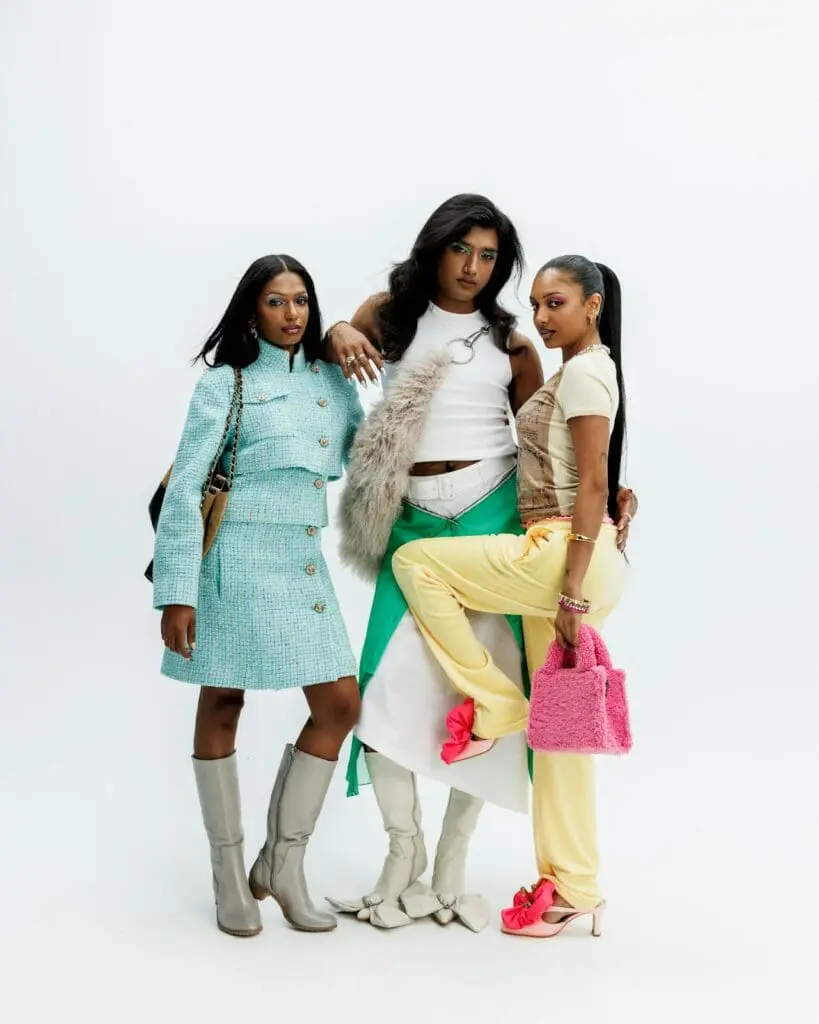
Carrie Bradshaw’s romantic escapades were consumed by an astonishing conflation of love with pursuit of devotion. The hunger, extended to all her interpersonal relationships, positions her as the ultimate lover — perpetually yearning for unwavering commitment she withholds from herself. Her suitors are the least interesting thing about her. It’s the women she cultivated around her; the sisterhood that has become the ubiquitous Mount Everest of female friendship on TV.
The divas of Sex and the City are heirs to a long lineage of dynamic female on-screen ensembles. Before aligning personalities with Carrie, Samantha, Charlotte, or Miranda, working women were debating their status as Rhoda, Phyllis, or Sue of The Mary Tyler Moore Show. These intimate trios and quartets of women, from The Golden Girls to Living Single to Insecure, are a roadmap to the inner workings of girlhood. Their beloved platonic chemistry — distinct profiles that shouldn’t work together and do — shifted the culture, turning scripted sisterhood into a version of connection worth imitating.
Girl talk is the warmth of being seen unhinged and known in sheer detail. If it cannot assuage your problems, a chat grounded in platonic love and caretaking could at least shrink them into laughter or expand them into tears. Post-Covid, romanticization of women friend groups — on screen and IRL — only grew.
TikTok’s enthralled with themes of girl code and girlhood, inciting trending rewatches of girl’s girls like those in Girls. Yet, the backstabbing friend breakups of Euphoria are more common than the camaraderie of Derry Girls. When (ex)girlfriends aren’t dating your high school (wild, Cassie) or college (We see you, Tell Me Lies) sweetheart, it means you weren’t actually sisters.
A friendless loner, like Carol in Pluribus, feels relatable and achievable. The last woman on earth in Vince Gilligan’s dystopian drama is cynical and averse to companionship despite being one of only 12 people remaining on the planet; personality-driven, apocalyptic world-ending event not responsible.
Depictions of loneliness and disingenuous relationships, platonic and romantic, are everywhere in entertainment, coinciding with relationship trends in the digital age. Social distancing cemented a gradual separation already in motion.
The expansiveness of connectivity removes physical barriers while manufacturing a loneliness that’s now entering our cinematic escape. There have always been breakdowns in communication in seasons-long female friendships, ushering in character-shifting arcs that lead to eventual repair.
The decision to reach is a rare vulnerability, on screen and off. Portraying women across different contexts, histories, and circumstances, the authentic womanhood in female ensembles, like Sex and the City, offered an examination of the power shift when women choose each other. Women navigating life, and its joy and grief and pain and love, together. Not perfectly, but not alone.
A study by American Perspectives showed a friendship recession is parallel with the financial one (that nobody will admit is happening). Fewer hours are saved for friends — a record 12% of Americans report having no close friends at all. Harvard researchers believe the loss stems from the too-damn-high cost of living and the girlboss purported side hustle economy. But they also say the shift impacts all tax brackets, and nobody can fully explain why.
In 2004, when Sex and the City ended, it would’ve been unthinkable that a continuation would be rejected by the generation who came of age emulating it. And Just Like That was criticized for storylines that abandoned its own characters, the most egregious of which failed the female friendships. Carrie and Miranda’s ride-or-die bond survived FIVE Big/Steve breakups.
Were fans supposed to buy that a friendship that lasted through the exhaustion of a girlfriend’s on-and-off boyfriend sagas was worth less than the last banana? The OG SATC audience was familiar with a Carrie who would rather starve than leave a friend out in the cold (or go without a new pair of Manolos), even if IRL, tolerance for repair and reconciliation is contracting.
Being chronically online normalized ghosting. Everyone’s doing it. Love interests, employers, friends. Disappearing without a word got conveniently rebranded as going “no-contact” to “protect your peace” — in all situations — when sometimes it’s avoidance of conflict concealed in people-pleasing tendencies. It’s part of a larger pattern of relational shrinking. Estrangement is on the rise, with 27% of Americans willing to cut off a relative. By that logic, dropping a friendship is viable for the smallest infractions.
Even Tinder has declared 2026 the “Year of Yearning,” reflected in box office breakers like Wuthering Heights. Dating apps know women are desperate to mitigate the absence of female companionship. Ironically, men often find women who don’t have girlfriends to be a red flag.
Women support women. He might wonder, who will she discuss their relationship with? Him? That’s because, despite the loneliness epidemic, nothing overrides women’s hardwired inclination to talk to each other. Gossip has been the key to female survival since saving bitches from burning as “witches” was a concern. For all humans, tangible connection is essential to mental and physical health, and unlike the guardedness of male friendships, women have a history of seeing each other (even when drunk in a bathroom) with clear eyes. Molly and Issa didn’t have to get back together — some argue they shouldn’t have — but they realized dinner in an Ethiopian restaurant tasted better in sisterhood.
Girl talk’s value has skyrocketed, despite its underutilization. It’s how we maintain gravity in an ecosystem that’s out of our control. How we face a transforming job market, unaffordable healthcare, and a political climate that wants us put in our place again. Women uniquely contend with anxieties that stem from threatened bodily autonomy, the pink tax, and lesser wages by the dollar. (If Planned Parenthood peddling Botox to pay their bills isn’t a sign of troubling times, nothing is.) The girls can’t afford to go to dinner together every week anymore, but they’re not FaceTiming instead. Critical error.
We’re seeing a loss of inspiration for the textured lives of modern womanhood. The female ensemble has nearly disappeared from the entertainment landscape, and when it does appear, its texture has flattened where it needs nuance. In debates over whether picking your friend up from the airport is worth the inconvenience, the ironing out of our relational needs is visible. Yes, they could get an Uber. It might be time-saving, but you’ll have to wait an hour and a half to find out they’re back with their Big. The group chat simply won’t suffice. Could’ve told you in the car, Miranda.